Most B2B companies spending $20,000 or more per month on paid acquisition already have a significant revenue problem they have not diagnosed yet. It is not their ad budget, their targeting, or their creative. It is the fact that 60-70% of the value they generate at the top of the funnel quietly disappears before it ever becomes closed revenue. A structured growth audit is the process of tracing exactly where that value disappears, stage by stage, so you can invest in fixes that compound rather than fixes that feel productive.
Why Most Growth Reviews Miss the Actual Problem
The typical quarterly review looks at channel-level metrics: cost per click, impressions, overall lead volume. Those numbers tell you almost nothing about where revenue is leaking. A company can have a 4% Google Ads click-through rate and a $38 cost per lead while still generating zero pipeline, because the leak is downstream at the SQL conversion stage or in the sales handoff process, not in the ad account.
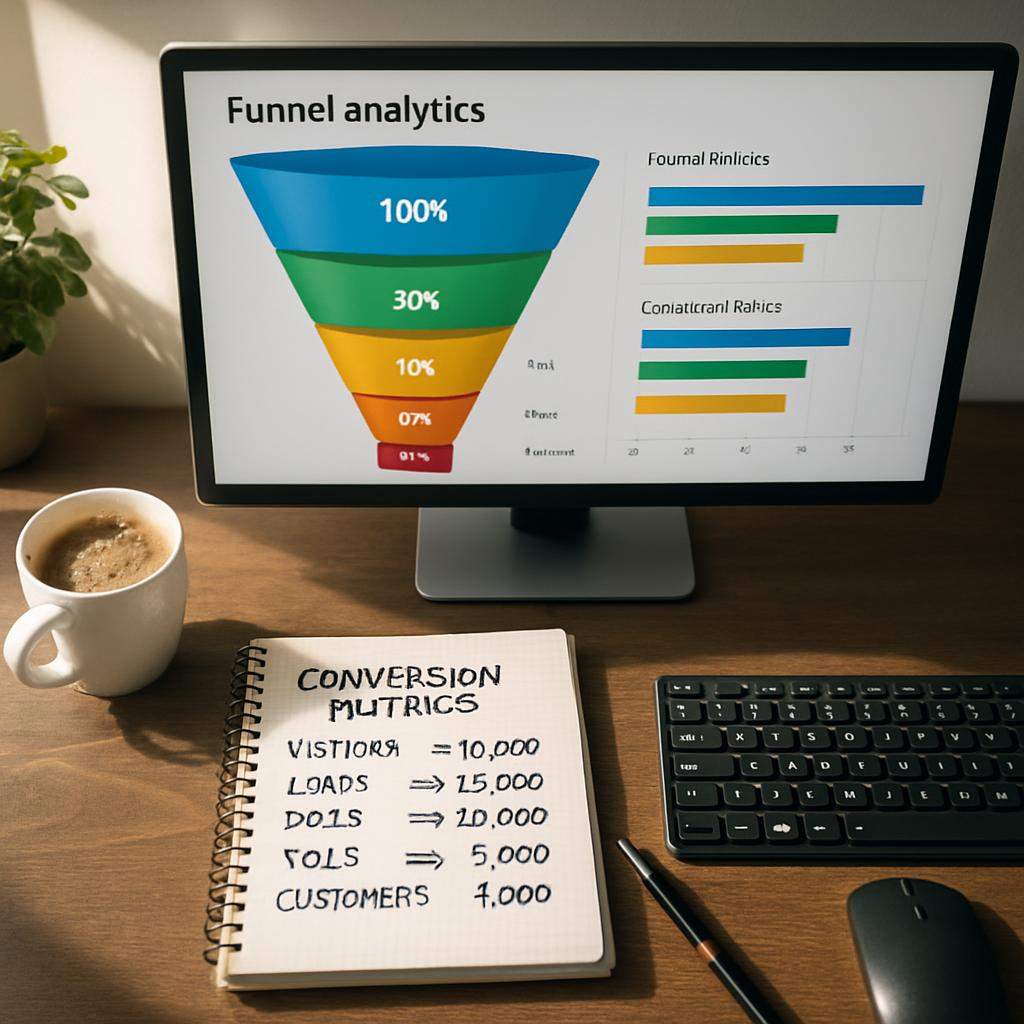
A growth audit separates the funnel into discrete stages and measures the conversion rate between each one: visitor to lead, lead to MQL, MQL to SQL, SQL to proposal, proposal to close. Most B2B funnels have one stage where the conversion rate is an outlier, dropping to less than half the industry norm. That single stage is almost always where fixing one thing produces a 30-50% pipeline improvement without spending an extra dollar on ads.
According to Gartner's research on the B2B buying journey, buyers now spend only about 17% of their total purchase process time actually talking to sales reps, which means the content and experience between each funnel stage carries far more weight than most teams assume. If your audit does not measure those inter-stage experiences, it is measuring the wrong thing.
The Five Layers a Proper Growth Audit Covers
A high-quality growth audit is not a channel report. It is a structured investigation across five layers: traffic quality, landing page conversion, lead qualification logic, sales handoff speed, and attribution integrity. Skipping any one of these produces a gap in the diagnosis. A company that fixes its landing page without fixing its lead qualification criteria will generate more leads of the same low quality.
- Traffic quality: segment paid, organic, and direct traffic by MQL-to-SQL conversion rate, not just volume. Channels with high lead volume but sub-5% SQL rates are burning budget.
- Landing page conversion: benchmark your form conversion rate against a realistic floor of 3-6% for B2B paid traffic. Anything under 2% is a structural problem, not a copy problem.
- Lead qualification logic: audit your MQL scoring model against actual closed-won data. Most models score engagement (page views, email opens) instead of intent signals (pricing page visits, demo requests).
- Sales handoff speed: measure the median time from form submission to first sales contact. Studies consistently show that responding within five minutes increases SQL conversion rates by more than 80% compared to a 30-minute response.
- Attribution integrity: verify that your CRM and ad platforms are reading from the same source of truth. Misattribution regularly causes teams to cut their best-performing channels and scale their worst ones.
The Landing Page Layer Is Where Most B2B Audits Find the Biggest Gap
When we run growth audits for B2B clients, the landing page stage produces the largest single fix opportunity in roughly 60% of cases. The typical paid search landing page for a B2B service business converts at 1.2-1.8%, when the realistic achievable benchmark for a well-structured page is 4-6%. Closing that gap alone, without changing ad spend, doubles or triples lead volume from the same budget.
The problems are almost never creative or visual. They are structural: the headline addresses the vendor's service instead of the buyer's specific problem, the form asks for eight fields instead of three, or the page has no credibility signal visible above the fold. For a detailed breakdown of what drives these failures, see our guide on why your B2B landing page does not convert, which covers the specific structural errors we see most consistently across audits.
Attribution Gaps Quietly Corrupt Every Growth Decision You Make
Attribution is the layer most growth audits skip entirely, which is why teams make the same wrong budget decisions year after year. If your Google Ads account reports 80 conversions last month but your CRM shows 31 leads from paid search, you have a 60% attribution gap. That gap means your cost per lead calculation is wrong, your ROAS calculation is wrong, and any budget reallocation decision based on those numbers will make things worse.
The fix starts with a simple cross-check: pull last-month lead volume by source from your CRM and compare it directly to your ad platform conversion data. A gap of more than 15% indicates a tracking problem that needs to be resolved before any other growth decision. For a more thorough framework on how to connect paid activity to actual revenue outcomes, our article on multi-touch attribution for B2B ROI walks through the specific models that work for longer sales cycles.
Prioritizing Fixes: The Impact-Effort Matrix for Audit Findings
A growth audit typically surfaces 8-15 specific issues. Trying to fix all of them simultaneously is the fastest way to ensure none of them get fixed properly. The right approach is to score each finding by two variables: the estimated revenue impact if resolved, and the time and resource cost to implement the fix. Fixes that score high impact and low effort go first, every time.
In practice, the top-priority fixes are almost always in this set: reducing form fields to three or fewer, adding a credibility signal (client logo strip or a specific result stat) above the fold on the landing page, cutting the lead-to-contact response time below five minutes, and pausing ad spend on audience segments with zero SQL conversion history. Collectively, these four changes typically produce a 25-40% pipeline improvement within 90 days, without any increase in budget.
The deeper structural fixes, such as rebuilding lead scoring models, restructuring campaign architecture, or migrating attribution infrastructure, are important but belong in the second wave. If you are running Google Ads specifically and want to understand whether your campaign structure is contributing to the quality problem, the breakdown in our piece on how to structure Google Ads for B2B is a practical starting point for that layer of the audit.
What a Growth Audit Output Should Actually Look Like
A useful growth audit output is a single document with three sections: a funnel stage conversion rate table benchmarked against realistic B2B norms, a ranked list of specific issues with estimated revenue impact per issue, and a 90-day fix roadmap with assigned ownership and success metrics. If your audit output is a 40-slide deck of channel performance screenshots, it is a reporting exercise, not an audit.
The benchmark data should be specific to your industry vertical and deal size, not generic digital marketing averages. A SaaS company with a $1,200 average contract value has a fundamentally different funnel economics profile than a professional services firm with a $60,000 average engagement. Applying the wrong benchmarks produces the wrong diagnosis and the wrong prioritization. The audit is only as useful as the specificity of the reference points it uses.