When a B2B SaaS client came to us spending $18,400 per month on Google Ads with a cost per qualified lead of $412, the problem was not their budget or their product. It was that their campaigns were pulling in hundreds of irrelevant clicks from job seekers, students, and competitors researching pricing, none of whom would ever buy. Over 90 days, through a systematic negative keyword build and match type restructure, we brought their CPL down to $161 without increasing spend.
The Starting Point: What the Account Actually Looked Like
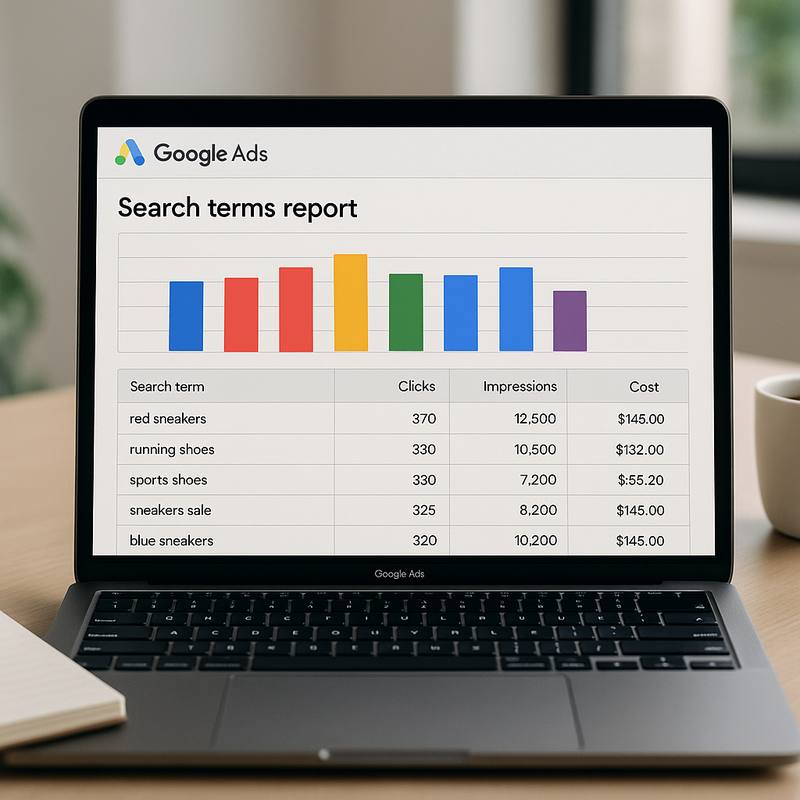
The client sold project management software to mid-market construction firms, with deal sizes averaging $28,000 ARR. Their Google Ads account had been running for 14 months, largely on broad match, with 23 active keywords and a negative keyword list containing exactly 11 terms. The search terms report told the real story: in the prior 30 days, the account had served ads on 1,847 unique search queries, of which we estimated fewer than 340 had any commercial intent from a relevant buyer persona.
This is a pattern we see constantly in B2B accounts. Broad match in a niche vertical will happily spend on queries like "free project management app", "construction management degree", and "how to become a project manager", all of which carry zero purchase intent. As we have written before on why Google Ads campaigns fail to generate quality B2B leads, the match type decisions made at setup tend to quietly bleed budget for months before anyone investigates.
The account also had no campaign-level negative keyword lists, meaning negatives added at the ad group level were not being shared across campaigns. Every new campaign started from scratch with a blank exclusion list.
Phase 1: The Search Terms Audit
We pulled every search term that had triggered an impression in the prior 90 days, roughly 4,200 unique queries. We categorised each one into four buckets: high-intent B2B buyer, low-intent or informational, job seeker or student, and competitor or brand research. The breakdown was stark: 18% fell into the high-intent bucket, 41% were informational, 27% were job-seeker related, and 14% were competitor or brand queries.
From there we built a master negative keyword list of 214 terms. The categories that added the most volume to exclude were: terms containing "free", "course", "certification", "resume", "salary", "tutorial", "how to become", and "template download". We also excluded all competitor brand names from non-branded campaigns to prevent impression share cannibalisation and wasted spend on queries where purchase decisions had likely already been made.
For the process and logic behind structuring these exclusions properly across a B2B account, the full framework for eliminating wasted spend with negative keywords covers the shared list setup and tiering approach we use across all client accounts.
Phase 2: Match Type Surgery
Once the negatives were in place, we tackled match types. The existing 23 keywords were all broad match. We migrated the top 8 performers by conversion volume to exact match, kept 9 in phrase match with tightened ad group theming, and paused the remaining 6 that had accumulated spend but zero conversions over 90 days. We also rewrote the ad group structure to separate top-of-funnel informational intent from bottom-of-funnel demo and trial intent, which had previously been mixed into the same groups and sharing the same landing page.
According to Google's own match type documentation, broad match relies heavily on Smart Bidding signals to find relevant queries, but in accounts with low conversion history (this client had 12 tracked conversions in the prior 90 days), the algorithm does not have enough signal to avoid irrelevant traffic. Switching high-value terms to exact and phrase match is not "old school" thinking, it is the appropriate response to low data volume.
Phase 3: Landing Page Alignment
Negative keywords and match types cleaned up the traffic, but CPL does not fall 61% from traffic quality alone. We audited the landing pages and found that the client was sending all paid traffic to their homepage, which had no form, no clear next step, and a bounce rate of 79% from paid visitors. We built two dedicated landing pages: one for demo-intent queries ("construction project management software demo") and one for evaluation-intent queries ("best project management software for contractors").
The demo page featured a single-field email capture above the fold, a 47-second product walkthrough video, and three customer logos from construction firms. The evaluation page led with a comparison table and a "talk to a specialist" CTA rather than a direct demo request, because evaluation-stage buyers in B2B rarely commit to a demo on first contact. Both pages were built without navigation menus to eliminate exit paths, a tactic we covered in depth when examining why most B2B landing pages fail to convert paid traffic.
The 90-Day Results
At the end of the 90-day period, the numbers were as follows. Monthly spend held steady at $18,200, within $200 of the original budget. Total clicks dropped from 2,940 to 1,610 per month, a 45% reduction. But form submissions increased from 44 to 113 per month, and sales-qualified leads (as confirmed by the client's CRM) rose from 29 to 71 per month.
- Cost per lead: down from $412 to $161 (61% reduction)
- Click-to-lead conversion rate: up from 1.5% to 7.0%
- Sales-qualified lead rate from paid: up from 66% to 81%
- Pipeline value generated in month 3: $1.1M vs $412K in month 1
- Negative keywords added: 214 across 3 shared lists
The pipeline improvement was the metric the client cared about most, and it followed directly from better traffic quality rather than from any increase in spend. The account also accumulated enough conversion data by month two that Smart Bidding became viable, and we moved the demo campaign to Target CPA with a $180 target, which the algorithm hit within three weeks.
What This Means for Your Account
The mechanics here are not unique to this client. Most B2B Google Ads accounts running broad match with minimal negative keyword coverage are paying for substantial amounts of irrelevant traffic. If your search terms report shows more than 30% of spend going to queries with no commercial intent from your buyer persona, you have a structural problem that bidding adjustments alone will not fix. The fix is always the same sequence: audit search terms, build negatives, tighten match types, align landing pages to intent.
For accounts that want context on where their CPL and conversion rate sit relative to industry norms, our B2B Google Ads cost benchmarks break down average CPCs, CPLs, and conversion rates by vertical, so you can assess whether your account is underperforming or simply operating in an expensive category. The difference matters when deciding how aggressively to restructure versus how aggressively to increase budget.